
Polarization fireworks!
This is a PUNCH Science Nugget
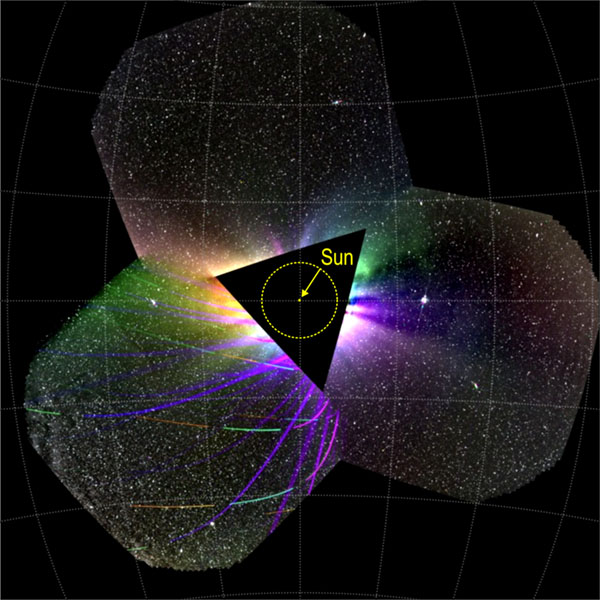
A debris impact on WFI-2, together with the polarized solar corona, makes for a colorful fireworks display, in this PUNCH polarized image from 13 October. The Sun, to scale, and the SOHO/LASCO C-3 field of view are marked on this image, which covers 90° of sky.
Each PUNCH instrument uses three polarizers, aligned 60° apart, to measure how much, and in which direction, light from the sky is polarized. We can then display the images using color to represent the polarization of the light.
While testing in-development data visualization tools, Science Operations Center scientist Ritesh Patel noticed this colorful display in preliminary data from the PUNCH constellation. Hue represents direction of polarization, and saturation represents degree of polarization. The extended solar corona is visible against the starfield, with the constellations Libra and Scorpio visible near the Sun at the center of the field of view. At this moment, one of the WFI spacecraft suffered a collision with a micrometeoroid, launching tiny fragments of the spacecraft itself outward through the instrument’s field of view. The fragments can be seen arcing across the field, leaving brilliantly colored tracks as they were captured through the three polarizers in turn.
Small debris impacts like this one rattle the spacecraft but generally do not harm PUNCH, which was designed to be able to weather them. Most satellites encounter impacts like this one. Famously, Space Shuttle tiles and even some of the outermost window panes were damaged by orbital-speed impacts with flecks of paint and other tiny grains. But imaging the resulting bits of spacecraft is more rare, as most missions don’t have the wide imaging field of view that WFI does.
These tiny pieces of PUNCH aren’t heavy enough to stay in orbit for long: drag forces from the extremely thin atmosphere at PUNCH’s 640 km (400 mile) altitude will make each PUNCH re-enter in about 24 years, but the tiny dust motes pictured here are expected to have re-entered the atmosphere less than a week after they were created.
PUNCH science nuggets are archived on our News Page.
You can subscribe to PUNCH nuggets by email.
NASA official releases about PUNCH are at the NASA PUNCH blog.